



The Future of Large Excavator Technology in Urban Development
Introduction
Urban development is a complex and dynamic field, where the challenges of space constraints, environmental regulations, and rapid project timelines demand innovative solutions. At the heart of these solutions lies heavy machinery, with the Large Excavator playing a pivotal role in transforming cityscapes. Renowned for its powerful digging capabilities and versatile applications, the Large Excavator enables contractors to tackle the intricate demands of modern urban construction, from high-rise foundations to infrastructure expansions. This article explores how advancements in Large Excavator technology are poised to redefine urban development, addressing both current needs and future aspirations.
The Large Excavator is more than just a tool; it is a cornerstone of efficiency in shaping modern cities. Its ability to perform deep excavation, site preparation, and material handling with precision makes it indispensable for projects in densely populated areas. As cities grow vertically and horizontally, the Large Excavator ensures that construction keeps pace with urbanization. Dr. Michael Rivera, a leading urban planning expert at MIT, emphasizes, “The Large Excavator is critical for urban development, providing the strength and accuracy needed to build sustainable, high-density environments.”
The purpose of this exploration is to highlight the trajectory of Large Excavator technology and its potential to revolutionize urban construction. As sustainability and smart city initiatives gain traction, innovations in electric excavators, automation, and compact designs are set to enhance the role of Large Excavators. By examining these advancements, we aim to provide a roadmap for stakeholders to leverage Large Excavator technology for more efficient, environmentally conscious, and adaptable urban development.
Current Role of Large Excavators in Urban Projects
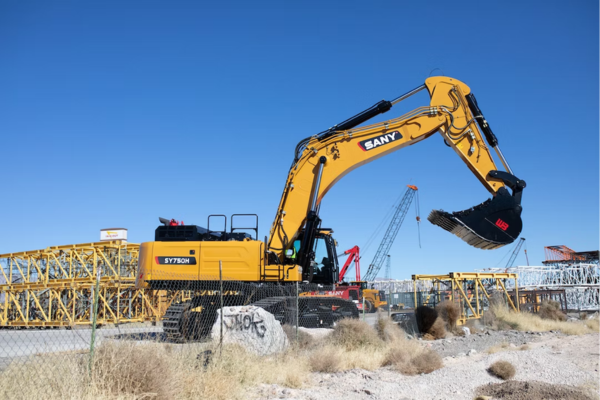
In the fast-paced world of urban construction, Large Excavators are indispensable for their ability to handle complex and high-stakes tasks. From laying the groundwork for towering skyscrapers to facilitating critical infrastructure expansions, these machines combine raw power with precision to meet the unique demands of city environments. Their current applications underscore their vital role in shaping modern urban landscapes and set the stage for future technological advancements.
Applications in High-Rise Foundation Work and Infrastructure Expansion
Large Excavators are the backbone of high-rise construction, where they perform deep foundation digging and basement excavation to support massive structures. Their high-capacity buckets and hydraulic attachments enable them to remove vast amounts of earth efficiently, ensuring stable underpinnings for buildings. Beyond high-rises, Large Excavators are critical for infrastructure projects like subway systems, bridges, and urban highways. For instance, during the expansion of London’s Crossrail project, Large Excavators were used extensively for tunneling and site grading, demonstrating their versatility in large-scale urban works.
Importance of Precision and Power in Constrained Urban Environments
Urban construction sites are often characterized by limited space and proximity to existing structures, making precision as crucial as power. Large Excavators excel in these conditions, with advanced hydraulic systems and operator controls that allow for accurate digging and material handling. Their ability to maneuver in tight spaces while maintaining structural stability is a game-changer. According to Jane Patel, a construction technology analyst at the University of Tokyo, “The Large Excavator’s precision in constrained urban settings minimizes disruption and ensures safety, making it a preferred choice for city projects.”
Examples of Large Excavator Use in Major Urban Developments
Real-world applications highlight the impact of Large Excavators in urban development. In Dubai, the construction of the Burj Khalifa relied heavily on Large Excavators for foundation work, handling the excavation of millions of cubic meters of soil. Similarly, in Singapore’s Marina Bay Sands project, Large Excavators facilitated land reclamation and deep excavation in a highly urbanized area. These examples illustrate how Large Excavators enable ambitious projects, delivering the efficiency and reliability needed to transform cityscapes while adhering to strict timelines and regulations.
Emerging Technologies in Large Excavator Design
The future of urban development hinges on innovation, and Large Excavator technology is evolving rapidly to meet the demands of sustainable, efficient, and compact construction. Cutting-edge advancements in electric and hybrid systems, artificial intelligence (AI), and compact designs are redefining the capabilities of Large Excavators. These technologies promise to enhance performance while addressing the unique challenges of urban environments, positioning Large Excavators as pivotal tools for the cities of tomorrow.
Advancements in Electric and Hybrid Large Excavators for Sustainability
As cities prioritize sustainability, manufacturers are developing electric Large Excavators and hybrid models to reduce emissions and fuel costs. These machines offer comparable power to traditional diesel models but with significantly lower environmental impact. For example, Volvo’s ECR25 Electric Large Excavator prototype has demonstrated zero-emission operation, ideal for urban sites with strict environmental regulations. Dr. Laura Simmons, an environmental engineering expert at ETH Zurich, notes, “Electric Large Excavators are a game-changer for urban construction, enabling contractors to meet green building standards without sacrificing performance.”
Integration of AI and Automation for Enhanced Efficiency
Artificial intelligence and automation are transforming Large Excavators into smarter, more efficient machines. Features like autonomous digging, real-time terrain mapping, and predictive maintenance optimize operations and reduce human error. Komatsu’s Intelligent Machine Control system, for instance, allows Large Excavators to follow digital blueprints with minimal operator input, improving site accuracy. According to industry leader Sarah Nguyen, “AI-driven Large Excavators can increase project efficiency by up to 25%, making them indispensable for complex urban projects where precision is critical.”
Development of Compact Yet Powerful Large Excavators for Urban Sites
Urban construction often requires machinery that balances power with maneuverability, leading to the development of compact Large Excavators. These machines maintain high digging force and bucket capacity while featuring smaller footprints to navigate tight city spaces. Caterpillar’s 336 GC model, for example, offers robust performance in a more compact frame, ideal for high-rise foundation work in dense areas. This innovation ensures that Large Excavators can operate effectively in constrained environments, supporting the growing trend of vertical urban expansion.
Impact of Large Excavator Innovations on Urban Development
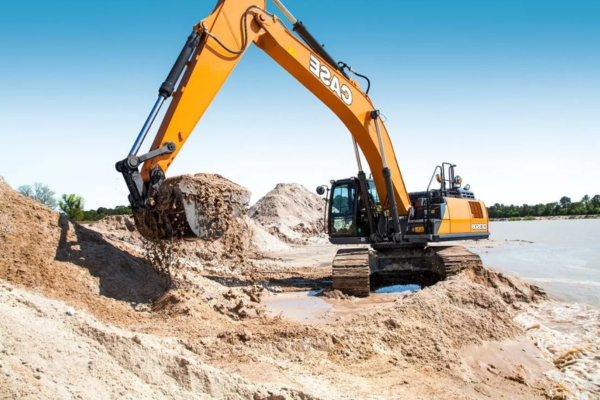
Innovations in Large Excavator technology are reshaping urban development by addressing critical challenges in sustainability, efficiency, and safety. From eco-friendly designs to AI-driven automation, these advancements enable Large Excavators to deliver superior performance in the complex landscape of city construction. Their impact is profound, driving faster project timelines, reducing environmental footprints, and enhancing adaptability in densely populated urban environments.
Reducing Environmental Impact Through Eco-Friendly Technologies
The shift toward electric Large Excavators and hybrid models is significantly lowering the environmental impact of urban construction. These machines produce fewer emissions and less noise, making them ideal for cities with stringent environmental regulations. For instance, Hitachi’s ZH210 hybrid Large Excavator reduces fuel consumption by up to 20%, contributing to green construction goals. Dr. Alan Foster, a sustainability expert at the University of Cambridge, states, “Eco-friendly Large Excavators are pivotal for urban development, helping cities achieve carbon neutrality while maintaining robust site preparation capabilities.”
Improving Project Timelines and Cost-Efficiency in City Projects
Large Excavator innovations, such as automated digging systems and real-time performance monitoring, are accelerating urban projects while optimizing costs. AI-enabled Large Excavators can execute tasks like foundation digging and material handling with greater precision, reducing rework and downtime. This efficiency translates to shorter project timelines and lower labor costs. According to a report by McKinsey, “Advanced Large Excavators can improve project productivity by 15-30%, offering significant savings for urban developers.” These advancements make Large Excavators a cost-effective solution for high-stakes city projects.
Enhancing Safety and Adaptability in Densely Populated Areas
Safety is paramount in urban construction, where Large Excavators operate in close proximity to workers and existing structures. Modern models feature proximity sensors, rearview cameras, and ergonomic cabs to enhance operator awareness and reduce accidents. Additionally, compact Large Excavators are designed to navigate tight spaces, ensuring adaptability in crowded urban sites. John Reynolds, a construction safety consultant, emphasizes, “The safety technologies in today’s Large Excavators are critical for urban environments, protecting both operators and pedestrians while maintaining operational flexibility.”
Challenges and Opportunities for Large Excavator Technology
As Large Excavators evolve to meet the demands of urban development, they face a unique set of challenges and opportunities. From navigating regulatory constraints to integrating with smart city initiatives, the future of Large Excavator technology hinges on balancing innovation with practicality. Addressing these hurdles while capitalizing on emerging possibilities will ensure that Large Excavators remain central to the transformation of modern cities.
Addressing Regulatory and Space Constraints in Urban Settings
Urban environments impose strict environmental regulations and space limitations, posing challenges for Large Excavator operations. Noise restrictions and emission standards often require contractors to adopt electric Large Excavators or hybrid models, which can be costlier upfront. Additionally, cramped construction sites demand compact designs without sacrificing digging power. Dr. Rachel Kim, an urban engineering professor at Columbia University, notes, “Adapting Large Excavators to comply with urban regulations while maintaining performance is a key challenge, but it’s driving innovation in sustainable machinery.”
Opportunities for Integrating Large Excavators with Smart City Initiatives
The rise of smart cities presents significant opportunities for Large Excavator technology. By incorporating AI-driven systems and IoT connectivity, Large Excavators can interface with digital city infrastructures, optimizing site preparation and resource allocation. For example, automated Large Excavators can sync with smart traffic systems to minimize disruptions during infrastructure projects. According to tech strategist Emma Liu, “Large Excavators equipped with smart technology can enhance urban planning, enabling seamless integration with smart city frameworks and improving overall project efficiency.”
Balancing Innovation with Affordability for Widespread Adoption
While advancements like autonomous Large Excavators and electric powertrains promise transformative benefits, their high costs can limit adoption, particularly for smaller contractors. Manufacturers must focus on scalable solutions that balance cutting-edge technology with affordability. Initiatives like modular Large Excavator designs, which allow for customizable upgrades, could bridge this gap. Industry analyst Mark Thompson predicts, “Affordable Large Excavator innovations will democratize access to advanced technology, enabling broader adoption in urban construction and accelerating city development globally.”
Conclusion
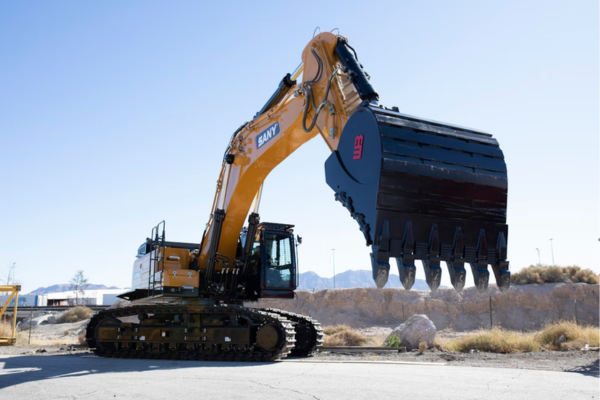
The future of Large Excavator technology holds immense promise for urban development, offering solutions to the complex challenges of modern city construction. Innovations such as electric Large Excavators, AI-driven automation, and compact designs are transforming how cities are built, enhancing sustainability, efficiency, and safety. By addressing regulatory constraints and aligning with smart city initiatives, Large Excavators are poised to drive the creation of greener, more connected urban landscapes. Their ability to balance powerful performance with adaptability ensures they remain indispensable in shaping the cities of tomorrow.
Stakeholders in the construction industry—contractors, developers, and policymakers—are urged to invest in next-generation Large Excavators to capitalize on these advancements. Embracing these technologies will not only streamline urban projects but also contribute to a sustainable and innovative future. The vision for urban development is clear: with Large Excavator technology leading the way, cities can grow smarter, faster, and more responsibly.
FAQs: Common Questions About Large Excavators
What makes a Large Excavator suitable for urban development?
A Large Excavator is ideal for urban development due to its powerful digging capabilities, precision, and adaptability in constrained environments. Equipped with advanced hydraulic systems and compact designs, these machines excel in tasks like high-rise foundation work and infrastructure expansion, ensuring efficiency and safety in dense city settings.
How are Large Excavators becoming more sustainable?
Manufacturers are developing electric Large Excavators and hybrid models to reduce emissions and noise, aligning with green construction goals. For example, Volvo’s electric prototypes offer zero-emission operation, making them perfect for urban sites with strict environmental regulations, while maintaining robust performance.
What role does AI play in modern Large Excavators?
Artificial intelligence (AI) enhances Large Excavators with features like autonomous digging, real-time terrain mapping, and predictive maintenance. These technologies improve site accuracy and project efficiency, reducing errors and downtime in complex urban projects, such as subway construction or land reclamation.
Are Large Excavators cost-effective for urban projects?
Yes, modern Large Excavators improve cost-efficiency through fuel-efficient engines, automated systems, and durable designs that minimize maintenance. Their ability to accelerate project timelines, as seen in highway expansions, ensures significant savings, making them a valuable investment for urban developers.
What challenges do Large Excavators face in urban settings?
Large Excavators must navigate space constraints, noise restrictions, and emission standards in urban areas. Innovations like compact Large Excavators and electric powertrains address these challenges, but high initial costs and regulatory compliance remain hurdles for widespread adoption.



Address: Jinan City, Shandong Province, China
Email: [email protected]
Phone: +8615863781978