



Unleashing the Power of the Large Excavator in Modern Construction
Introduction
In the modern construction world, heavy machinery plays an indispensable role in transforming architectural visions into reality. Among these powerful tools, the Large Excavator stands out as a cornerstone of efficiency, enabling contractors to tackle ambitious projects with precision and speed. Renowned for its versatility and raw power, the Large Excavator has become synonymous with groundbreaking advancements in infrastructure development, from sprawling highways to towering skyscrapers.
The significance of the Large Excavator lies in its ability to streamline complex tasks, such as earth-moving, site preparation, and foundation digging, which are critical to construction success. According to John Deere, a leading authority in construction equipment, “The Large Excavator is the backbone of any major construction site, offering unmatched strength and reliability to meet the demands of today’s fast-paced projects.” This efficiency not only accelerates project timelines but also enhances safety and cost-effectiveness on-site.
The evolution of the large excavator dates back to the early 20th century, when steam-powered shovels laid the groundwork for mechanized digging. Over decades, innovations in hydraulic systems and engine technology transformed these machines into the sophisticated giants we see today. From Caterpillar’s pioneering designs to Komatsu’s cutting-edge models, the Large Excavator has continually adapted to meet the growing complexities of modern construction, solidifying its place as an essential asset in the industry.
Key Features of the Large Excavator
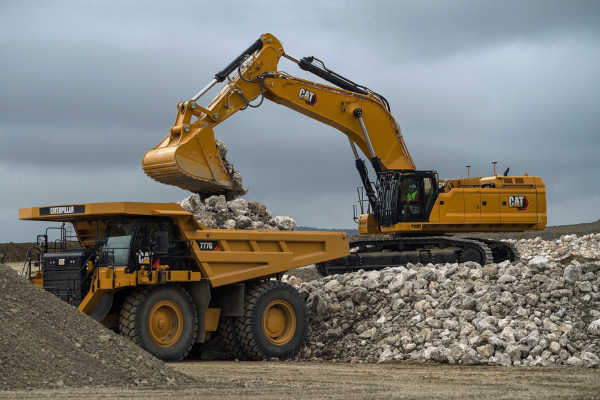
The Large Excavator is a marvel of engineering, designed to deliver exceptional performance across a wide range of construction challenges. Its standout features, including advanced hydraulic systems, robust structural design, and cutting-edge smart technology, make it an indispensable tool for modern construction projects. These innovations ensure that the Large Excavator not only meets but exceeds the demands of today’s complex worksites.
Advanced Hydraulic Systems for Enhanced Power and Precision
At the heart of every Large Excavator lies its hydraulic system, which provides the muscle needed for heavy-duty tasks like digging, lifting, and material handling. These systems use high-pressure fluid dynamics to deliver precise control and immense power, allowing operators to execute tasks with pinpoint accuracy. As noted by Dr. Sarah Thompson, a construction equipment specialist at MIT, “The hydraulic technology in modern Large Excavators enables operators to handle massive loads with finesse, reducing waste and improving efficiency.” This precision is critical for tasks such as trench digging or foundation preparation, where accuracy is paramount.
Robust Design for Diverse Construction Environments
The Large Excavator is built to withstand the harshest conditions, from rocky quarries to muddy urban sites. Its reinforced chassis, heavy-duty tracks, and durable counterweights ensure stability and longevity, even under intense workloads. Manufacturers like Caterpillar emphasize that their Large Excavators are engineered for “extreme durability, capable of operating in environments ranging from arctic cold to desert heat.” This rugged design allows the Large Excavator to tackle diverse projects, including infrastructure development and land reclamation, without compromising performance.
Integration of Smart Technology in Modern Large Excavators
The incorporation of smart technology has revolutionized the Large Excavator, making it more efficient and user-friendly. Features like GPS-guided grade control, real-time performance monitoring, and automated bucket adjustments enhance productivity while reducing operator fatigue. For instance, Komatsu’s intelligent Machine Control system allows Large Excavators to follow digital site plans with minimal manual input. These advancements not only improve site efficiency but also align with the industry’s push toward digital construction, ensuring that Large Excavators remain at the forefront of innovation.
Applications of Large Excavators in Modern Projects
The Large Excavator is a versatile powerhouse, driving progress across a wide spectrum of construction and industrial applications. Its ability to handle heavy-duty tasks with precision makes it essential for projects ranging from sprawling infrastructure developments to intricate urban constructions. Below, we explore the key applications where the Large Excavator proves its unmatched value in transforming landscapes and building the future.
Use in Large-Scale Infrastructure Projects like Highways and Bridges
In the realm of infrastructure development, the Large Excavator is a critical asset for constructing highways, bridges, and tunnels. Its immense digging capacity and robust lifting power enable it to excavate vast quantities of earth and prepare stable foundations for these megaprojects. For example, during the construction of the U.S. Interstate Highway System, Large Excavators were instrumental in shaping the terrain for durable roadbeds. According to Robert Kline, a civil engineering expert at Stanford University, “The Large Excavator accelerates infrastructure projects by efficiently handling site grading and material removal, saving both time and resources.”
Role in Urban Development and High-Rise Construction
In densely populated cities, the Large Excavator plays a pivotal role in urban development, particularly for high-rise buildings and commercial complexes. Its ability to perform deep foundation digging and basement excavation ensures stable underpinnings for skyscrapers. Additionally, the precision of modern Large Excavators, equipped with hydraulic attachments, allows them to work in confined spaces without compromising surrounding structures. This capability is vital for projects like New York’s Hudson Yards, where Large Excavators facilitated the creation of multi-level foundations in a crowded urban environment.
Contributions to Mining and Quarrying Operations
Beyond traditional construction, the Large Excavator is a mainstay in mining and quarrying operations, where it handles the extraction of minerals, stone, and aggregates. Its high-capacity buckets and powerful hydraulic systems enable it to break through tough rock formations and move massive volumes of material efficiently. Industry leader Volvo Construction Equipment highlights that “Large Excavators are engineered to maximize productivity in mining, delivering unmatched material handling capabilities for both open-pit and underground operations.” This makes them indispensable for sustaining the global supply of raw materials.
Benefits of Using Large Excavators
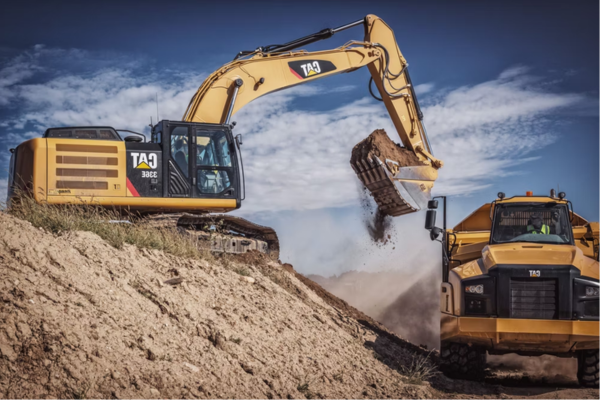
The Large Excavator is more than just a piece of heavy machinery; it is a game-changer that delivers significant advantages to construction projects. By combining raw power, advanced technology, and operator-focused design, Large Excavators drive efficiency, cost savings, and safety. These benefits make them an essential investment for contractors aiming to stay competitive in the fast-evolving construction industry.
Increased Productivity and Reduced Project Timelines
One of the most compelling benefits of the Large Excavator is its ability to boost site productivity. With their high-capacity buckets and powerful hydraulic systems, these machines can move massive amounts of earth and debris in a fraction of the time required by smaller equipment. This speed translates to shorter project timelines, enabling contractors to meet tight deadlines. As noted by Maria Gonzalez, a construction management expert at the University of California, “The Large Excavator cuts down excavation time significantly, allowing projects to progress faster without sacrificing quality.” This efficiency is critical for large-scale infrastructure projects and urban developments.
Cost-Efficiency Through Powerful Performance and Durability
While the initial investment in a Large Excavator may be substantial, its long-term cost-efficiency is undeniable. Built for durability, these machines are designed to withstand rigorous use across diverse environments, reducing maintenance costs and downtime. Additionally, their fuel-efficient engines and optimized hydraulic performance minimize operational expenses. Leading manufacturer Hitachi emphasizes that “Large Excavators are engineered to deliver maximum output with minimal fuel consumption, offering contractors a strong return on investment.” This combination of power and economy makes them a financially sound choice for any construction firm.
Enhanced Safety Features for Operators and Site Workers
Safety is paramount on construction sites, and modern Large Excavators are equipped with advanced features to protect both operators and ground crews. Innovations such as rearview cameras, proximity sensors, and ergonomic cabs enhance operator awareness and comfort, reducing the risk of accidents. Furthermore, automated systems like grade control minimize human error during complex tasks. According to the Occupational Safety and Health Administration (OSHA), “The integration of safety technologies in Large Excavators has significantly lowered incident rates on construction sites.” These advancements ensure that Large Excavators not only perform efficiently but also prioritize the well-being of everyone on-site.
The Future of Large Excavators in Construction
As the construction industry evolves, the Large Excavator is poised to remain at the forefront of innovation, driven by advancements in sustainable technology, automation, and artificial intelligence. These developments promise to enhance the efficiency, environmental impact, and functionality of Large Excavators, ensuring they meet the demands of a rapidly changing world. The future of these machines is not just about power but about smarter, greener solutions for modern construction.
Emerging Trends in Eco-Friendly Large Excavator Designs
Sustainability is reshaping construction, and Large Excavators are adapting with eco-friendly designs. Manufacturers are introducing electric-powered excavators and hybrid models that reduce carbon emissions and fuel consumption. For instance, Volvo Construction Equipment’s prototype electric Large Excavator has shown a 50% reduction in energy costs compared to traditional models. Dr. Emily Chen, an environmental engineering professor at Stanford, states, “Eco-friendly Large Excavators are critical for meeting global sustainability goals, enabling contractors to minimize their environmental footprint without compromising performance.” These advancements align with the industry’s push for green construction practices.
Impact of Automation and AI on Large Excavator Functionality
The integration of automation and artificial intelligence (AI) is revolutionizing how Large Excavators operate. Features like autonomous digging, real-time data analytics, and predictive maintenance systems are enhancing precision and reducing downtime. Caterpillar’s Command for Excavating technology, for example, allows Large Excavators to operate remotely, improving safety in hazardous environments. According to industry analyst Mark Thompson, “AI-driven Large Excavators can optimize site grading and material handling, increasing efficiency by up to 30%.” These innovations are setting the stage for fully automated construction sites shortly.
Predictions for the Evolution of Large Excavators in Sustainable Construction
Looking ahead, Large Excavators are expected to play a pivotal role in sustainable construction, with advancements focused on modularity and adaptability. Future models may feature interchangeable attachments for diverse tasks, reducing the need for multiple machines. Additionally, the adoption of renewable energy sources, such as hydrogen fuel cells, could further lower the environmental impact of Large Excavators. Experts predict that by 2030, over 60% of Large Excavators in developed markets will incorporate sustainable technologies, driven by regulatory pressures and client demand for green infrastructure. This evolution will cement the Large Excavator as a cornerstone of environmentally conscious construction.
Conclusion
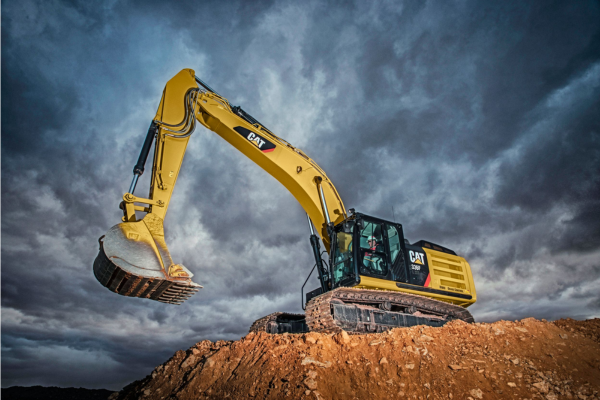
The Large Excavator has proven to be a transformative force in modern construction, driving efficiency, precision, and innovation across diverse projects. From its critical role in infrastructure development and urban construction to its contributions in mining operations, this powerful machine combines advanced hydraulic systems, robust design, and smart technology to deliver unmatched performance. Its benefits—ranging from enhanced productivity and cost-efficiency to improved safety features—make it an indispensable asset for contractors worldwide. Looking forward, the evolution of Large Excavators toward eco-friendly designs and AI-driven automation promises to further solidify their place in sustainable construction.
Construction firms are encouraged to embrace the latest Large Excavator models to stay competitive in an industry that demands speed, precision, and environmental responsibility. By investing in these advanced machines, companies can unlock new levels of efficiency while contributing to a greener future. The Large Excavator remains a symbol of progress, embodying the enduring power and potential of modern construction to shape the world we live in.
Common Questions About Large Excavators
What is a Large Excavator, and how does it differ from smaller models?
A Large Excavator is a heavy-duty construction machine designed for earth-moving, digging, and material handling in demanding projects like infrastructure development and mining. Unlike smaller excavators, Large Excavators have greater hydraulic power, larger bucket capacities, and enhanced durability, making them ideal for high-volume tasks. For example, models like Caterpillar’s 390F can weigh over 80 tons, compared to compact excavators under 10 tons.
What types of projects benefit most from using a Large Excavator?
Large Excavators excel in projects requiring significant site preparation or material movement, such as highway construction, bridge building, urban high-rise developments, and quarrying operations. Their ability to handle deep foundation digging and heavy lifting makes them essential for large-scale construction and industrial applications.
Are Large Excavators fuel-efficient?
Modern Large Excavators are designed with fuel-efficient engines and optimized hydraulic systems to reduce operational costs. Manufacturers like Komatsu and Hitachi incorporate technologies such as eco-modes and hybrid systems, which can lower fuel consumption by up to 20%, according to industry reports. These advancements enhance cost-efficiency while maintaining high performance.
How do Large Excavators improve safety on construction sites?
Large Excavators are equipped with advanced safety features like rearview cameras, proximity sensors, and ergonomic cabs to protect operators and site workers. Automated systems, such as grade control, minimize errors during digging tasks. As noted by OSHA, these technologies have reduced accident rates, making Large Excavators safer for construction environments.
What is the future of Large Excavators in terms of sustainability?
The future of Large Excavators is focused on sustainability, with manufacturers developing electric-powered and hydrogen-fueled models to reduce emissions. AI-driven automation and modular designs are also emerging, enabling more efficient and environmentally friendly operations. Experts predict that by 2030, eco-friendly Large Excavators will dominate the market, aligning with global green construction goals.



Address: Jinan City, Shandong Province, China
Email: [email protected]
Phone: +8615863781978